
In The Prince, Machiavelli uses very vivid examples and descriptions to support his point of view on how actions and destiny determine a prince’s success. In chapter 25, destiny refers to circumstances that are currently happening, which is not always in the prince’s control. Instead of taking the route that you should not work toward a particular outcome because all events are controlled by destiny, Machiavelli’s point of view in this chapter is that only half of human’s actions are controlled by destiny, and the rest is free will. Machiavelli believes that destiny is a set of circumstances that can lead to success or failure. He uses a river flood as a metaphor, stating that if the Italian princes had more suitable preparations, the “flood” of foreign invitations would not have swept over the unprotected country. Machiavelli implies that virtue is a natural quality that a prince cannot change, therefore if a prince is trying to change their actions to suit the time, they most likely will not because it is not in their nature. Machiavelli’s use of the word destiny was very notable because of the way it led to the rest of the story. When Lady Fortuna was mentioned, Machiavelli said that it is important to treat destiny like the woman she is and approach her with boldness.
Posts
The Prince: Leader
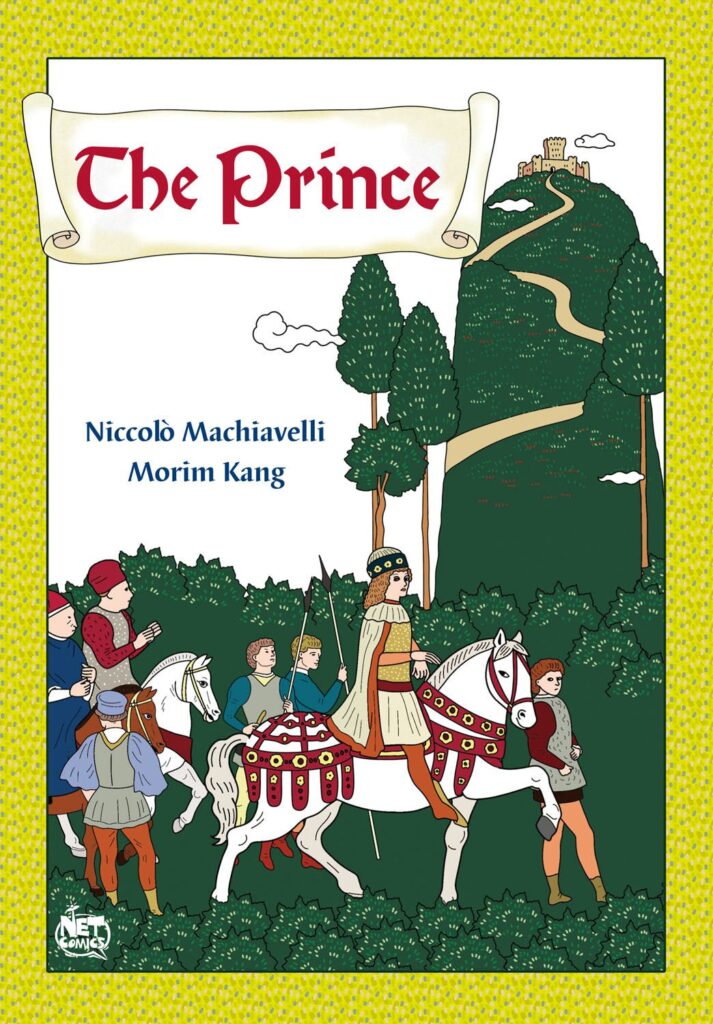
In “The Prince,” Machiavelli discusses what a true leader should be. Throughout the book, he talks about how a prince should behave in order to be a successful ruler. He believes that a prince should rely on himself and should not be overly kind or violent. For example, Machiavelli states in Chapter 8 that it is acceptable for a prince to use violence, but only when it is absolutely necessary. He believes that unnecessary violence will turn the people against him. Machiavelli also believes that a prince must do anything to secure and ensure prosperity in the state. In Chapter 18, he argues that a prince should adapt to a circumstance in order to deal with it effectively. He uses an ancient Greek myth to show the characteristics of an effective prince. In the Greek myth, there were centaurs who are half-man and half-beast. The man was the noble portion, while the beast represented the bad part. This is used by Machiavelli to demonstrate that a prince must be both parts depending on the scenario.
War/Violence

In “The Prince”, Machiavelli believes that good laws and good rulers are derived naturally from a good military. He talks about the topic of war as an almost necessary thing to go through for the development of countries. Machiavelli insinuates that successful countries/rulers are built upon their success in wars. Machiavelli’s description of war touches on more than just the direct use of military force. When he talks about war, he touches on different topics such as, tactical strategy, prowess, geographic mastery, etc. Alongside wars is obviously violence, and Machiavelli talks about that tremendously in the Prince. He discusses ways to become a successful prince, using violence (chapter 8), and then goes on to give an example. He mentions the military commander, and Greek tyrant of Syracuse, Agathocles. In order to become a ruler, he called the leading citizens and the Senate together for a meeting, and then proceeded to massacre them. To Machiavelli, Cruel and evil acts could be justified when done (but not repeated) to establish a prince’s power and to benefit his subjects.
The Prince/Machiavelli : Freewill
Machiavelli incorporated free will in “The Prince” as a way to measure how it will play a role in the prince’s failure or success. Machiavelli refers to prince’s in the past who have failed and how their free will led to this downfall. In chapter 25 of the prince, Machiavelli speaks on the role of fortune amongst human affairs. He goes on to argue that fortune is half responsible for human action leaving the rest up to free will. Generally speaking based on The prince Machiavelli is a firm believer of free will and humans having the power to form their destinies to a certain degree as well as he believes that humans do not have absolute control over events.
Today’s activity
Please write your thoughts on each chapter as answers to this post!
Le Sante: La Guaritrice e La Guerriera

Santa Caterina da Siena, Rutilio Manetti, 1630 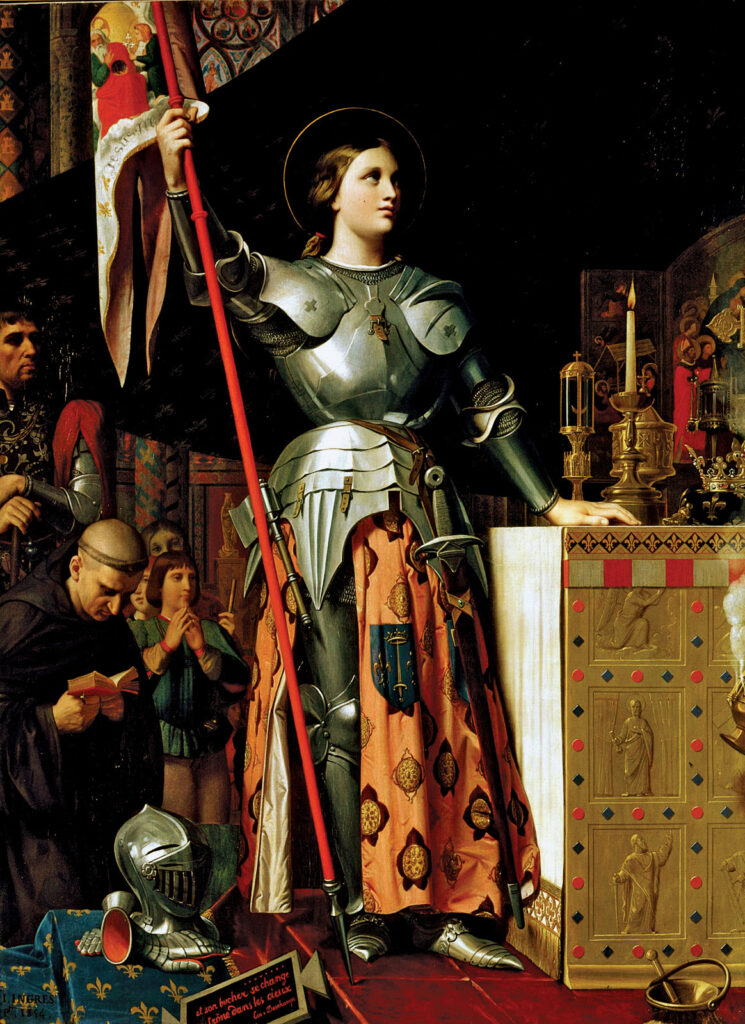
Giovanna d´Arco, Coronazione di Carlo VII, Jean August Dominique, 1854
Caterina da Siena è una figura che causa molta intriga. Nella sua lettera al Papa Gregorio XI la Santa fa molte richieste. Una delle più evidenti è stata la richiesta del ritorno del Papa a Roma da Avignone. Cosa che alla fine fa il Papa. Il misticismo e il conseguente seguito che la circondava da giovane è forse un forte motivo per cui Caterina da Siena si sente così privilegiata a fare richieste del genere ad una figura così importante come il Papa. Un comportamento volitivo completamente al di là delle aspettative di una donna dell´epoca. Leggendo la sua lettera a Gregorio XI non si può fare meno che ricordarsi d´un altra santa, pero una d´aspetto guerriero cioè Giovanna d´Arco. Come Caterina da Siena anche Giovanna d´Arco scrisse colui che poi sarebbe diventato re di Francia, Carlo VII, chiedendo azione contro la minaccia inglese a Orleans, suppliche che il re ascolta e la manda in battagli contro gli inglesi. Molto simile c´è il fatto che tutte e due le sante avevano visioni e sembrava che avessero un rapporto speciale con Dio; la differenza principale tra di loro è che Caterina da Siena è una santa guaritrice e Giovanna d´Arco è una santa guerriera.
Angela da Foligno Analysis: Step Two

Interacting with Angela da Foligno’s steps to form a close alliance with God, was very interesting. The text was very informative and relatable from a spiritual and religious perspective. The language used in the text was very lively and created vivid imagery/messages . As a person of the Catholic faith I relate greatly with the part of the text in which step two is spoken about, confession is one of the biggest steps on your journey to get closer to God. The descriptive language used to describe how one feels before confession is very impactful, “The second step is a confession of sin accompanied by shame and bitterness. At this point the soul feels no love, only pain. “ Opening up about the feelings and thoughts she experienced because of the fact her soul needed the spiritual healing and connection of God.
Angela da Foligno Analysis

While reading Angela da Foligno’s memorial, I noticed that a lot of what she said in her steps of repenting her sins showed guilt, pain, and she seemed kind of remorseful. For instance, in steps 8 and 10, she talked about how she became aware of her sins with great pain, and understanding. She stated that God had rescued her from her sins and hell, but that in a way she feel like she crucified him. Angela paints a picture in our minds when she states “….he appeared hanging on the cross. He told me that I should look at his wounds”…” He showed me all that He endured” etc. It was her way of showing us that God had gone through a ton, being sacrificed for her sins, but that she was still reminded of them when he states “All this I endured for you.”
Angela da Foligno: Willed
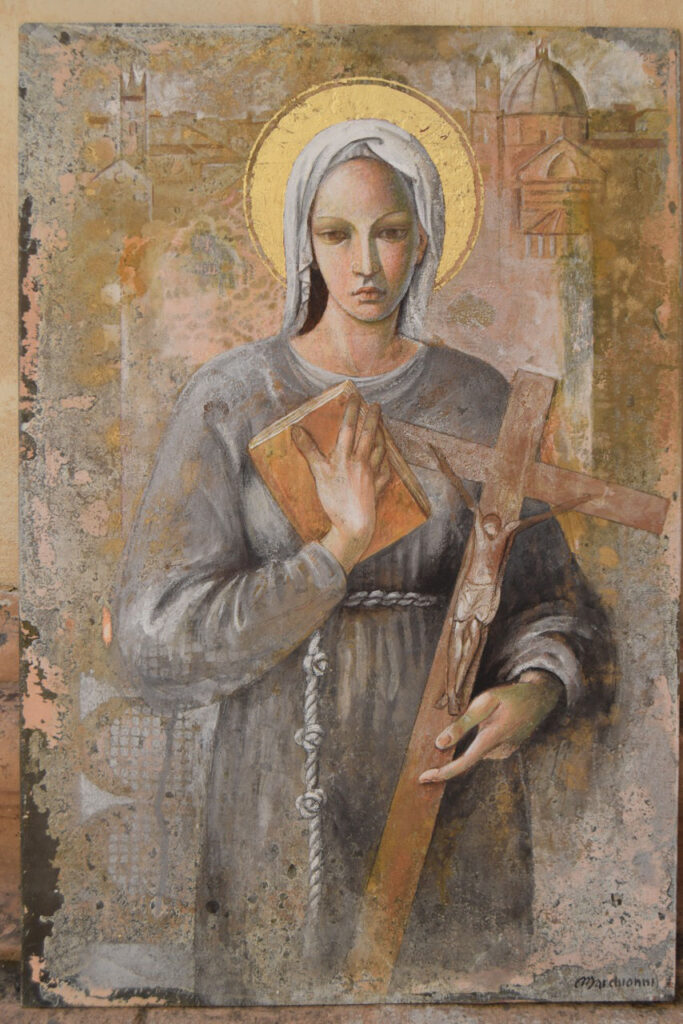
In The Memorial, Angela’s transcendental journey is disclosed to us through various steps, where we see her devotion grow as she moves further along. During the ninth step, Angela reveals some of the things that she abstained from and some of the things that she integrated into her daily life in order to strengthen her relationship with God. Once “the path to the cross” became clear to her, Angela started to reject “fine food, fancy clothing and head dresses.” In addition, she also stripped herself in a literal and metaphorical sense which strongly indicates her drive to follow God, regardless of society’s view on what is scandalous or not.
Angela da Foligno: Guilt

In this painting, Angela da Foligno is shown holding onto a cross tenderly and revealing the mystic scars on each of her palms. On her face, is a rather guilty expression, which is further explained in The Memorial of Angela da Foligno. She says that at the seventh step of her spiritual development, she was “moved to reflect on the cross” which brought about a lot of pain. During the eighth step, Angela became aware of her sins all over again while looking at the cross, feeling as though she had crucified Jesus herself. I imagine that because the cross serves as a reminder of the sacrifices that Christ made for the betterment of humanity, the guilt that Angela was feeling only increased.

